

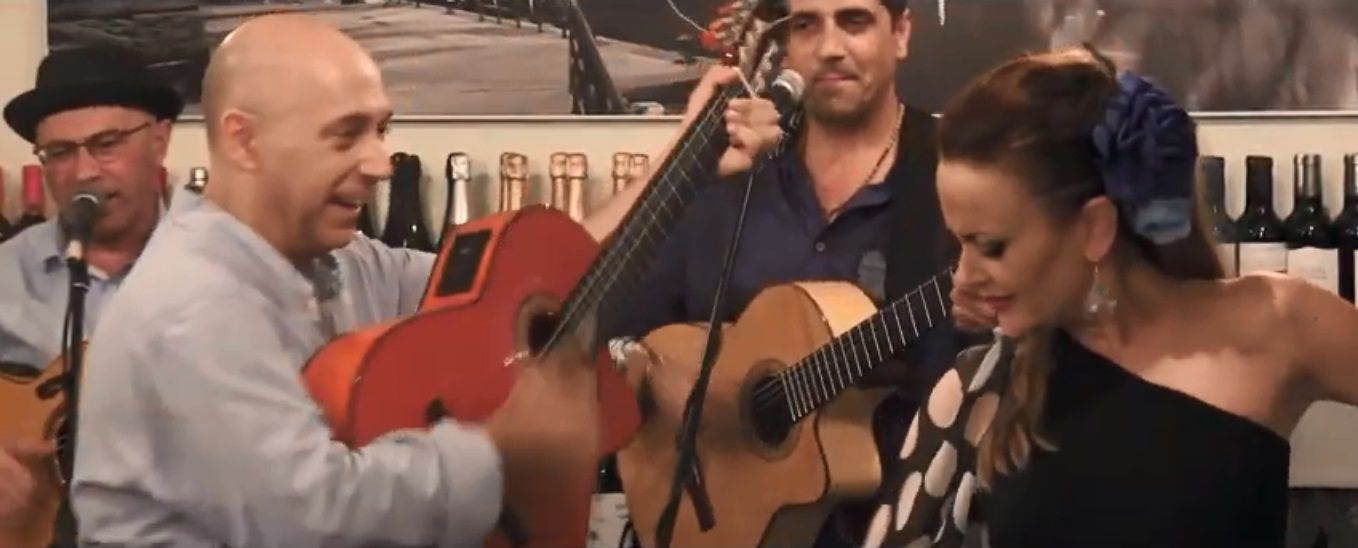
What is it about 'Rumba' that we like so much?
At celebrations, festivals, weddings, and festive meetings of all kinds, Rumba rules.
Some of the existing types of Rumba have the same characteristics, but at the same time they are very different from each other. The first, and the oldest is the Cuban Rumba from African roots and mother of other latin rhythms, like for example 'Salsa'. Spanish Rumba is one of the flamenco styles, that forms part of the vocals (cantes de ida y vuelta). The commercial traffic between the ports of Cádiz and Seville provided to the Spanish country the ability to adapt to the Cuban rhythms.
Catalonian Rumba is more contemporary and arises from the fusion of Flamenco, with salsa and rock and roll. The Catalonian gypsy community is the catalyst, and the soul of this style.
 .
.
The three kinds respond to a pattern of 4/4 the same as the Cuban 'Son' and 'Guaracha', and the Spanish Tangos; but as well as its structure they also share a deep and mutual feeling: celebration of life.
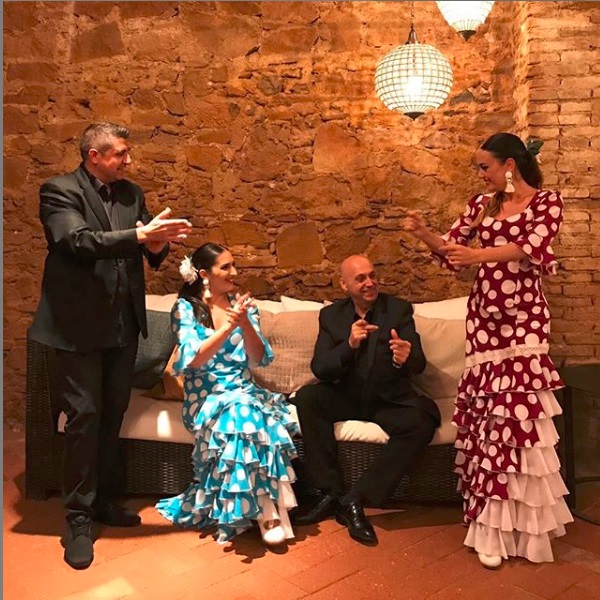
This is why, when it comes to partying and celebrating, making people smile and getting up to dance, we perform 'Rumba y Sabor' or Rumba Gypsy Band.
'Rumba y Sabor' is a musical show of singing and dancing traditional Catalonian Rumba, and Rumba Gypsy Band is based on the 'Disco' Rumba that originated from the South of France in the eighties with the 'Gypsy Kings'.
Peret is the main exponents of Catalonian Rumba, and he named as his successor, his nephew Miliu Calabuch, collaborator of EVNA events and an excellent rumbero. Miliu is the most authentic artist of Catalonian Rumba.
Finally, we will answer the question we put to you at the beginning of this post: 'What does Rumba have that we like so much?
The fact is that it helps to make us happy :)